The Process
An evolution of the format
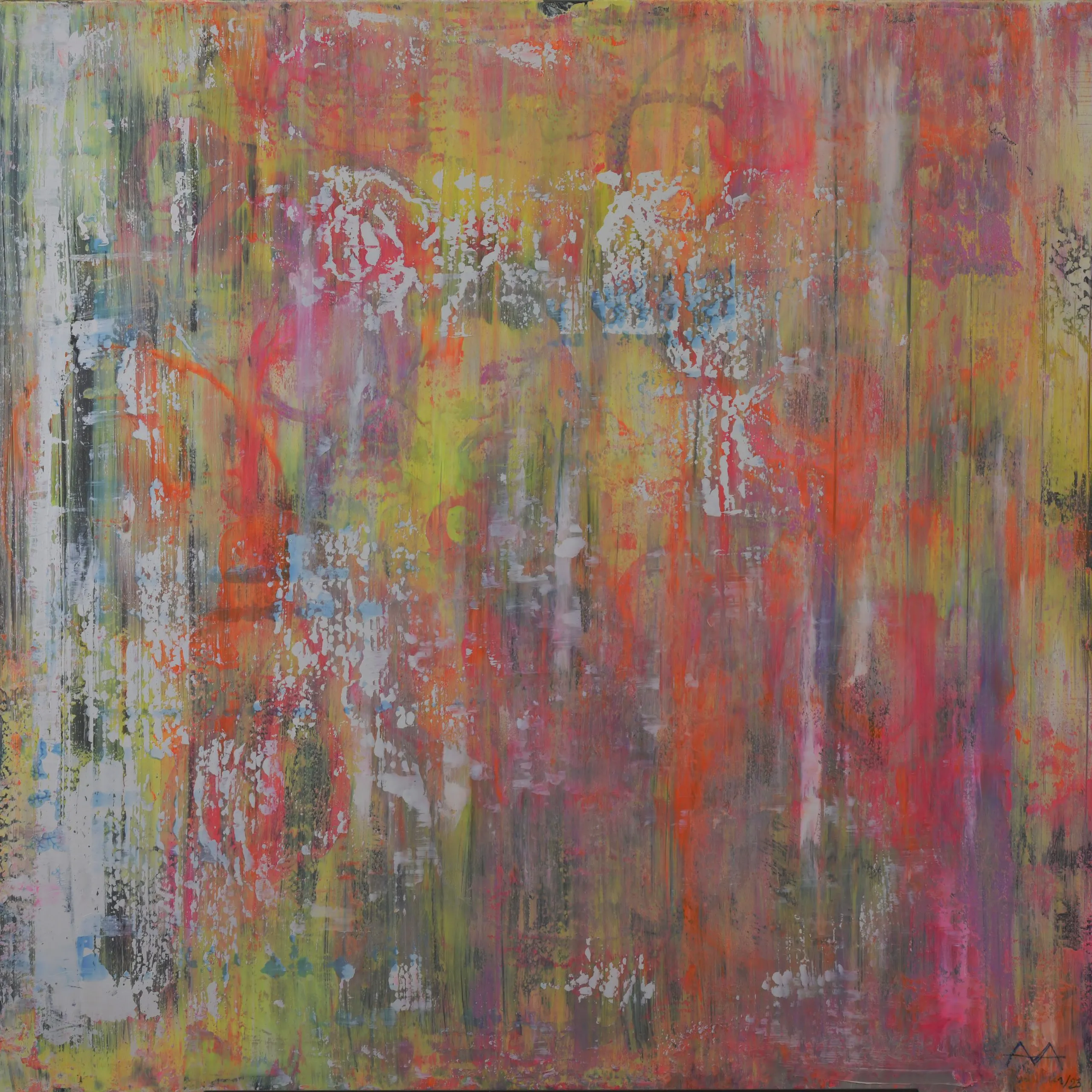
In the beginning, there was no imposed format or measurement. The first works were born free of any constraint of proportion: only matter and intuition guided their form.
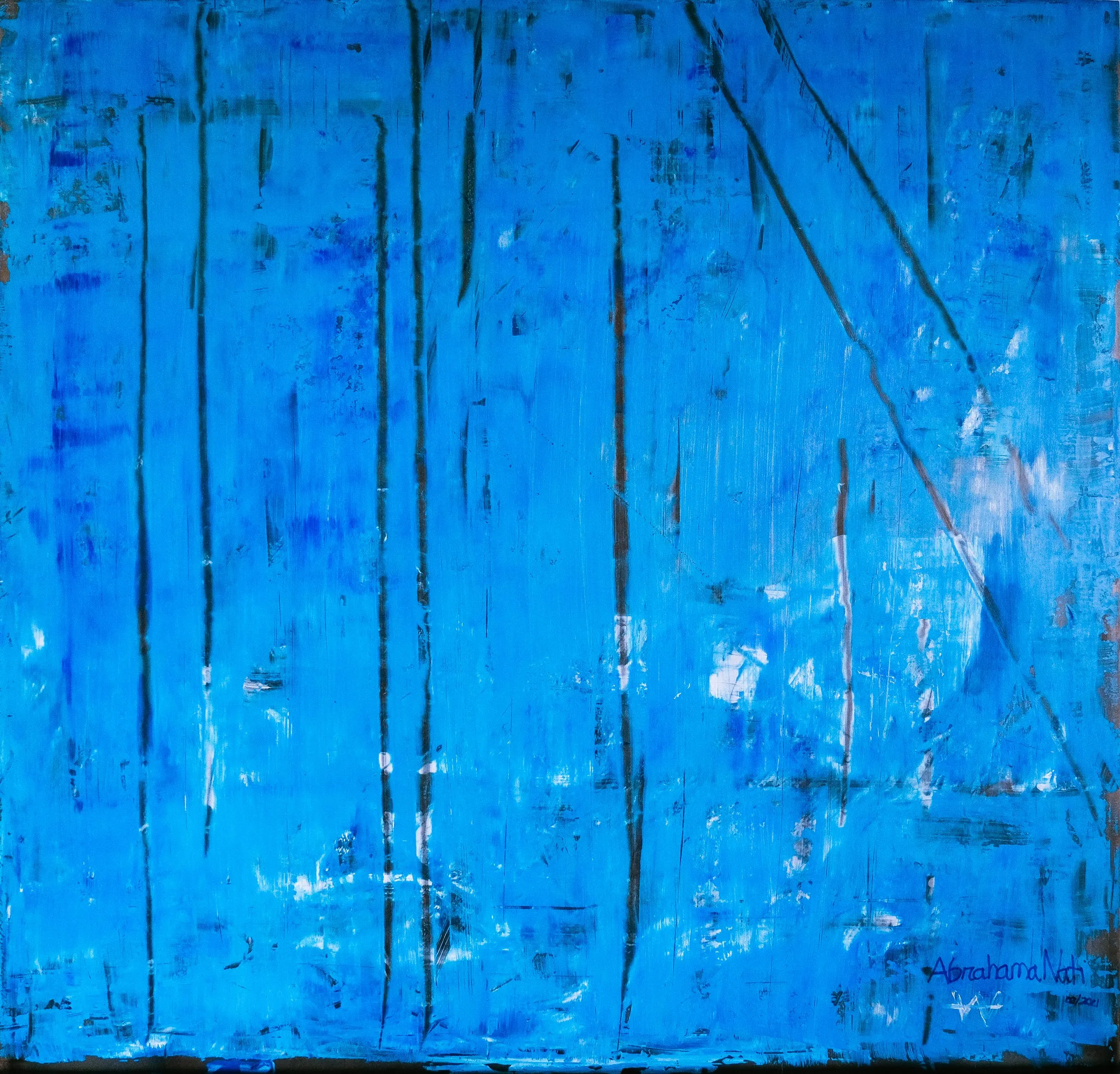
Then the square imposed itself, without my really deciding it: never quite perfect, always in tension towards balance. It first took the form of large 150 × 150 cm plates, folded at the top and bottom (1 cm then 1 cm at each end) to allow hanging, bringing the height down to 146 cm: a 150 × 146 cm format. It then tightened into a more intimate format, following the same principle: a 125 × 125 cm plate, folded in the same way, for a height of 121 cm: 125 × 121 cm, which carried several years of my work.
A new process, currently taking shape
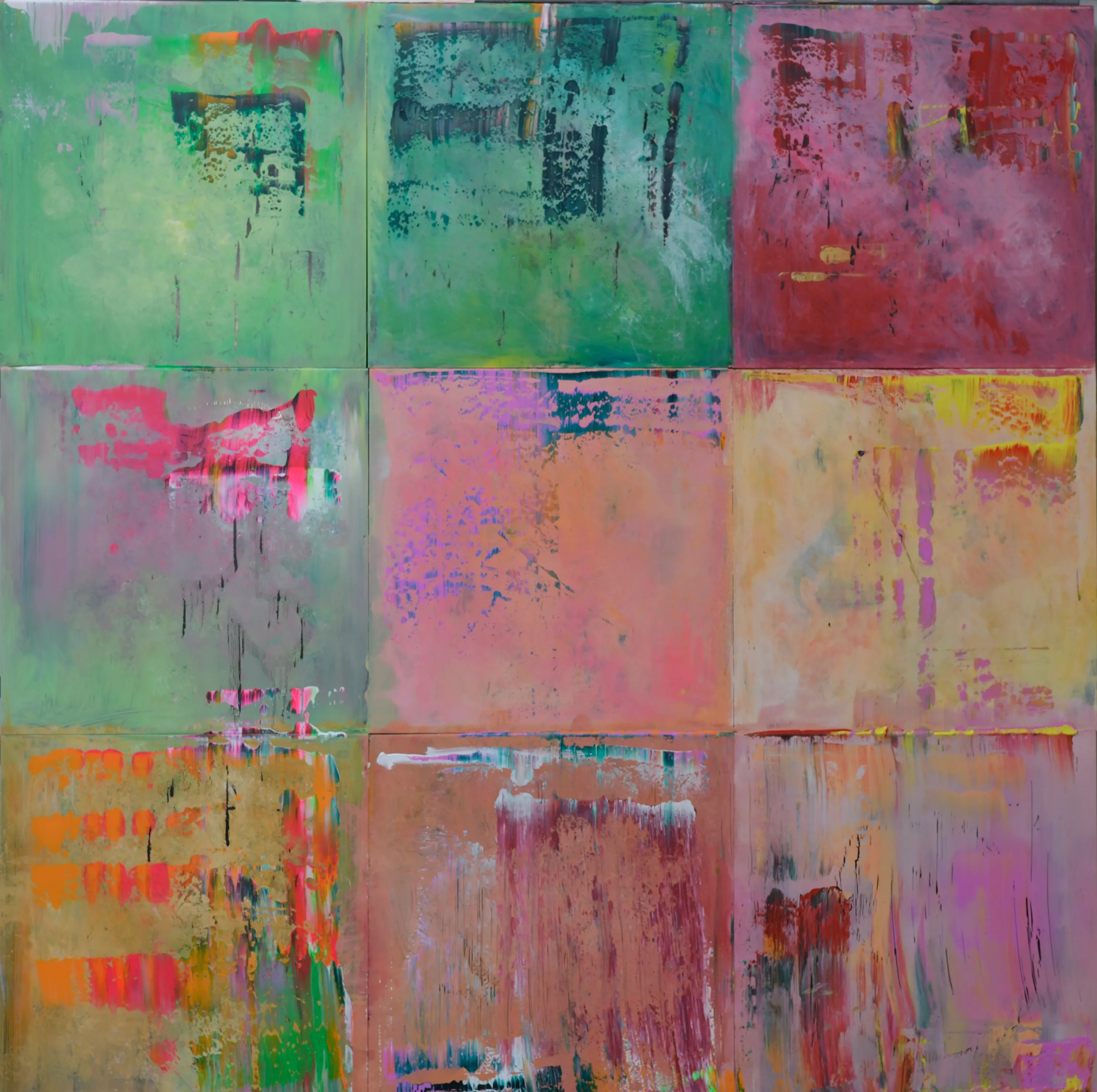
This is the format I am working on today: a stage I have only just begun to embody in matter. Without my having sought it, it starts again from the same plate dimension as before, 150 × 150 cm, but this time cut into nine identical pieces, 48 cm wide by 50 cm high. Each one is folded at the top only, in a U shape (1 cm then 1 cm), to allow hanging: a simple, functional gesture that brings the height down to 48 cm, exactly meeting the width. Nine perfect 48 × 48 cm squares, assembled side by side in three rows of three, recover their unity: one large square of 144 × 144 cm.
A coherence that was not sought
None of this was calculated in advance. The form imposed itself at every stage of this journey (the freedom of the beginning, the almost-square formats, then this return to the 150 cm dimension, this time to give birth to an exact square), just as my whole process has always imposed itself: the symbols, the words, matter itself. It is only by looking at it afterwards that I recognised, each time, a coherence I had not sought.
I do not know everything these numbers and proportions carry. But I know, deep down, that something greater than me is at work in this geometry, an intuition that other artists before me, such as Hilma af Klint, also carried: that form, before being thought, can already be right.
The editions
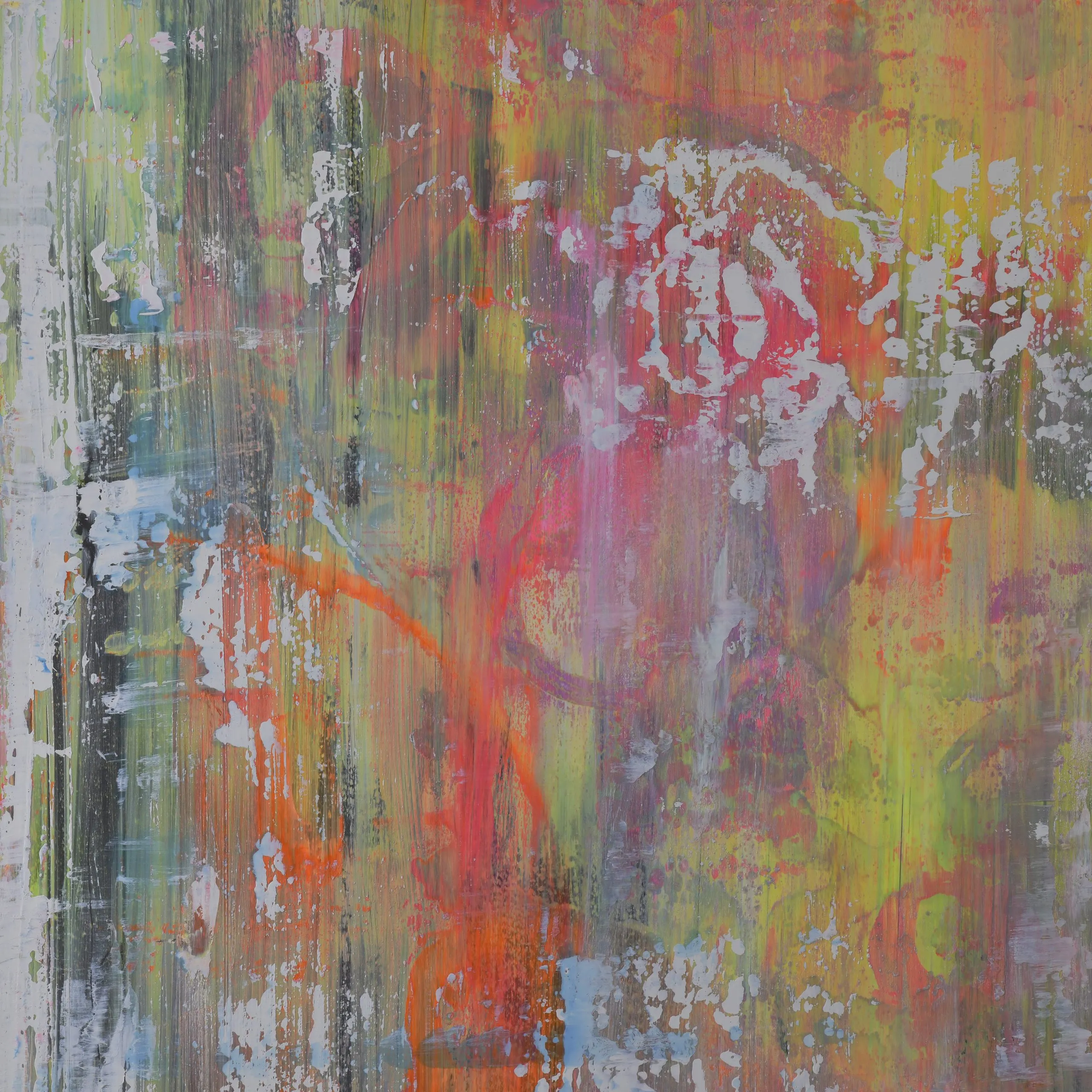
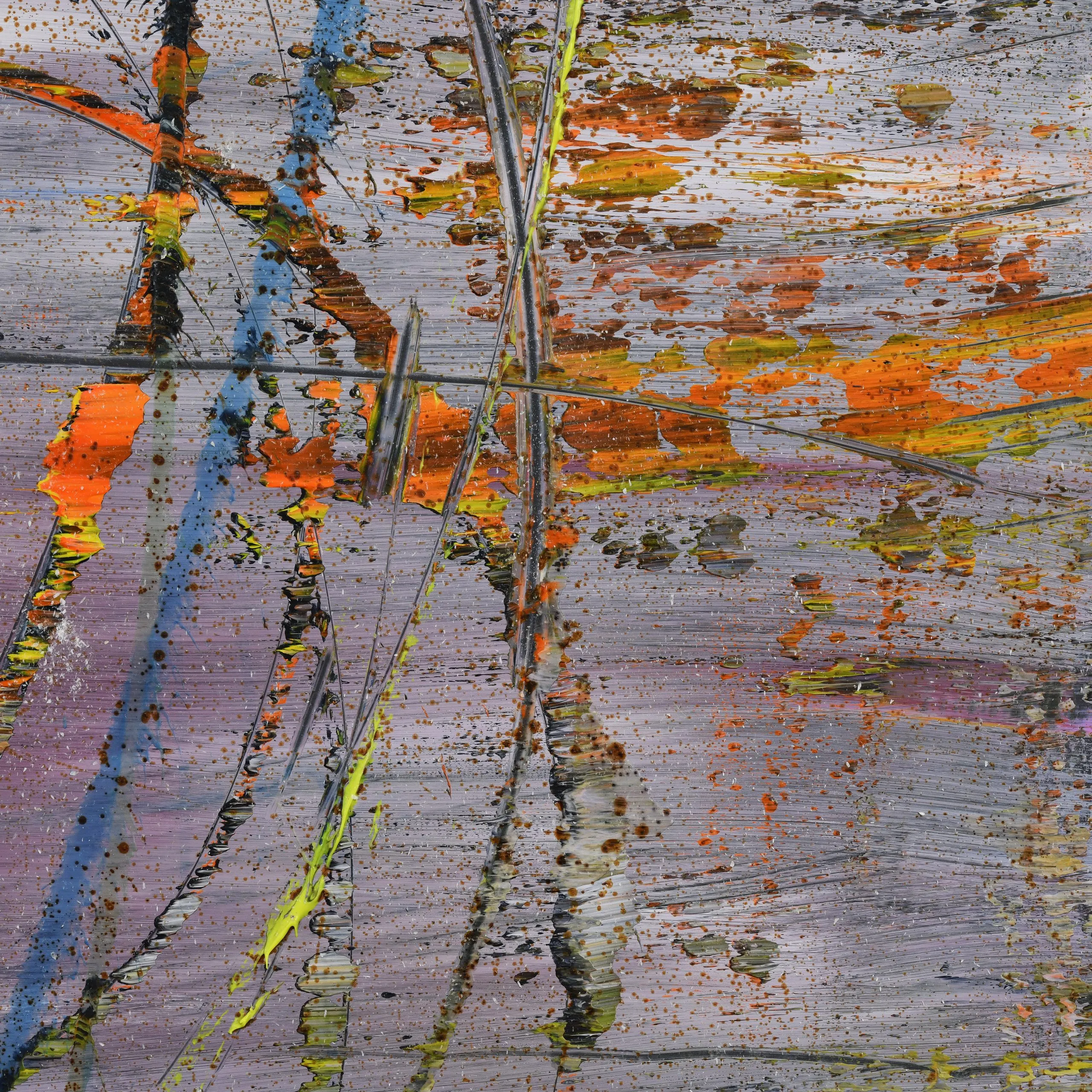
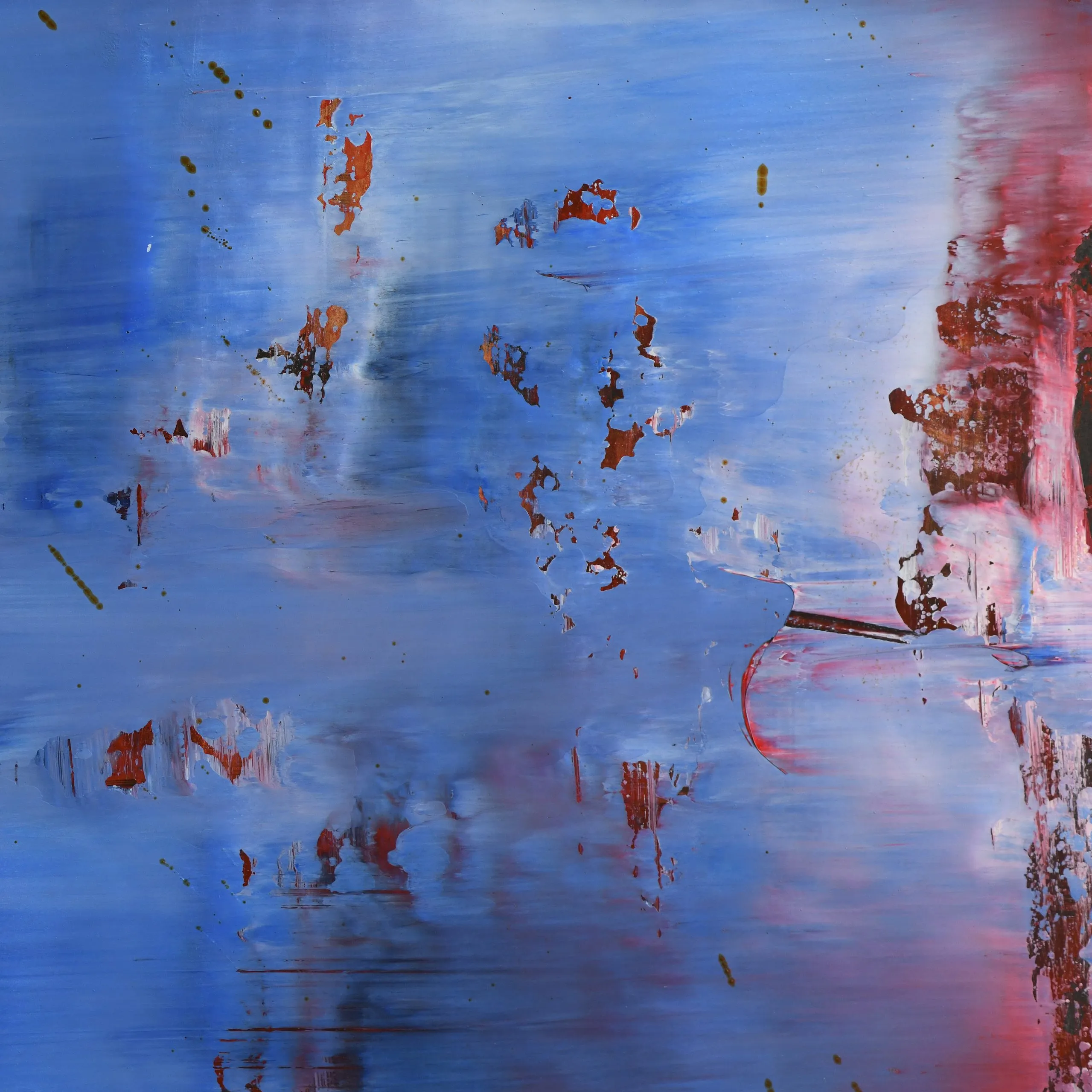
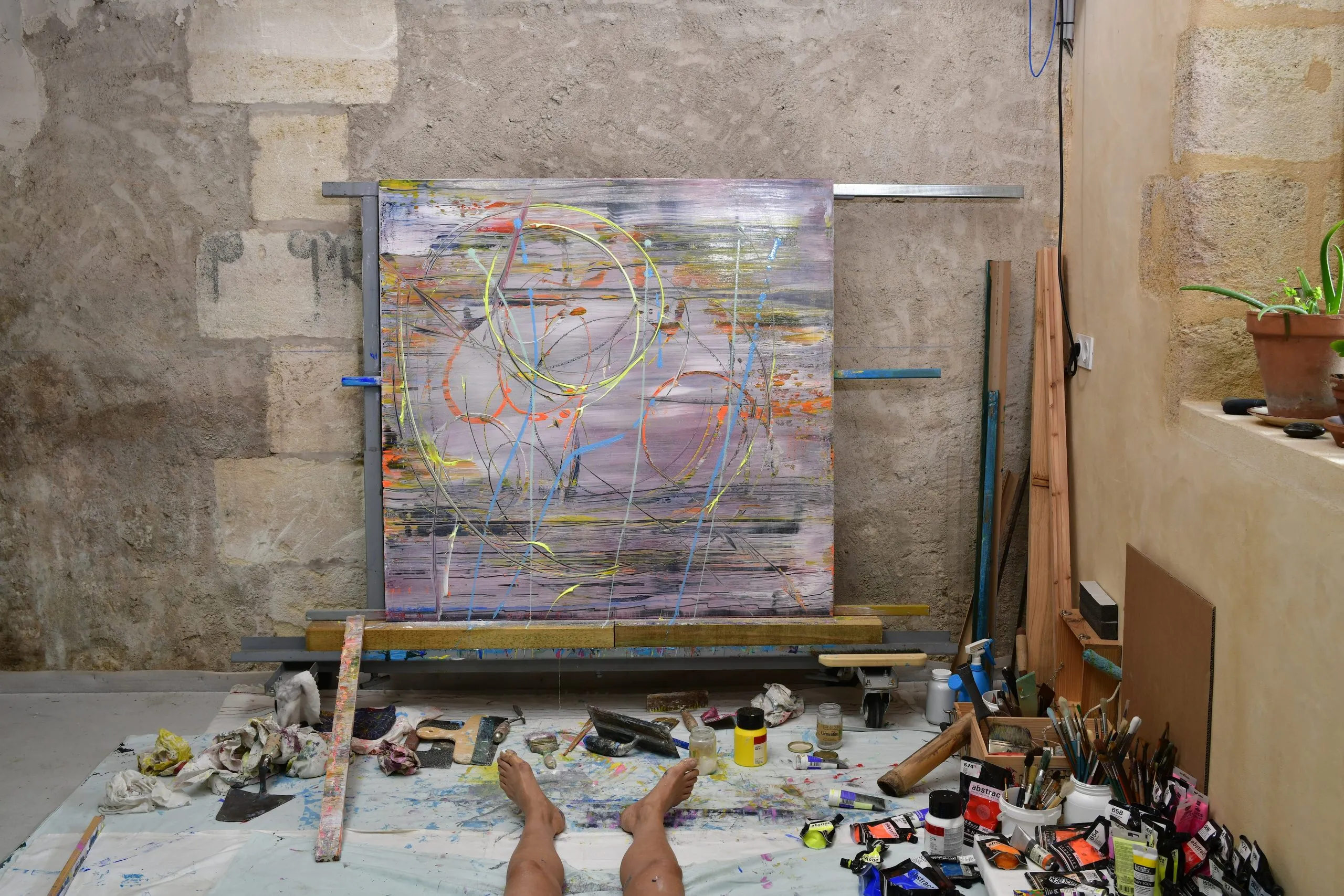
Some works also exist as editions: not as a reproduction of the work as a whole, but as a chosen fragment, isolated and printed on a particular paper, in a 50 × 50 cm format for a 40 × 40 cm image, in a limited series of 20.